Caregiver Tips
Caregiver Tips »
By FixNation Medical Director, Dr. Kerri Anderson
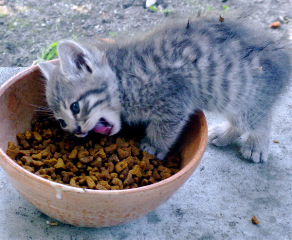
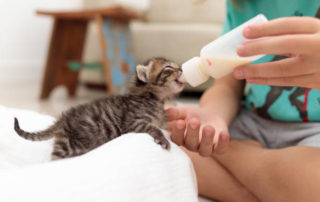
As kitten season approaches, many of you will bring the joy and fuzzy goodness of a new kitten into your home. Congratulations! Here are a few tips that can help you keep your kitten happy and healthy for a long healthy life.
Take your new kitten to the veterinarian.
Your kitties Doctor will provide you with important health information such as a thorough physical examination, vaccination schedules, deworming regimens, behavioral advice and nutritional information.
Spay and/or neuter your new kitten.
Spaying your female kitten will prevent uterine infections …
Caregiver Tips, featured »
Feline panleukopenia virus (FPV) is a highly contagious parvoviral infection of cats and has a particularly high incidence of disease in feral and stray cat populations. This virus infects all ages of cats and is usually fatal in kittens.
Outbreaks of panleukopenia are often associated when there is an increase in populations of kittens , i.e. “kitten season”.
The virus is hardy and can persist in the environment for months to years. It is able to withstand extreme heat and is resistant to many disinfectants including Parvosol, Roccal, Triple Two and isopropyl …
Caregiver Tips »
Disasters can happen at any time. You need a plan for your family and that includes your pets. Pets will have special needs during this difficult time and The CASEY Plan can help with that. Please feel free to make copies for yourself, your family and your friends.
Be Prepared
Hurricanes, floods, wildfires, hazardous material spills–disasters can strike any time, anywhere. But with preparation and planning, your family–including your pets–can be protected.
If You Evacuate, Take Your Pets
The single most important thing that you can do to protect your pets if you evacuate …
Caregiver Tips »
Last week we had one very pretty, very pregnant momma cat who decided to deliver her kittens right there in the trap upon her arrival at our clinic!
First bit of good news, all five of the kittens came out healthy and strong. We then determined that momma cat was a friendly stray, which was the second bit of good news. She was very tame as can be and easy to handle, so the first-time trapper who had brought momma cat in decided to foster the new happy family until the …
Caregiver Tips »
What’s in a name, right? In this case not much. Ringworm has nothing to do with worms. Nor does it always show up as a ring!
Ringworm is a skin infection caused by a fungus, otherwise known as dermatophytes. These are microscopic parasitic fungi that live on the skin, specifically in hair follicles. Ringworm is a very hardy fungus that can be present in soil. Cats and cattle are the two species of animals that seem to get ringworm the most, although dogs and other animals can contract it. Humans …
Caregiver Tips »
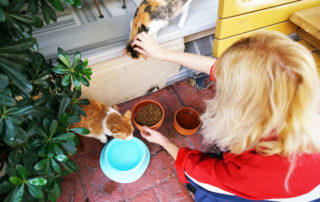
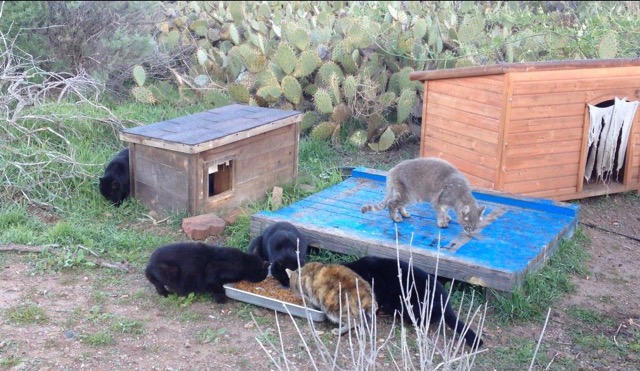
Are you feeding feral cats? Whether you are a rookie feeding a few cats in the backyard, or whether you are a “pro” who has been feeding large colonies of cats in back alleys for years, here are eight great ways to make sure your feral feeding stations are stellar set-ups.
1. Proper Placement of Stations
Feeding stations should be discreet, low-profile and they should blend in with the immediate surroundings as much as possible. Try to keep them out of sight from the general public. Two reasons for this — first, …
Caregiver Tips »
by Liz Cava
Some cats just don’t seem to want to go into the trap, no matter how hard you try. You’ve used smelly bait, you’ve withheld food to get them hungry, and yet you still sit out night after night and come up with an empty trap!
Here are the top 10 tips and tricks I’ve collected over the years that may help you nab your wily kitty:
Pray. Even if you don’t pray…pray.
Drink. Even if you don’t drink…drink.
Communicate telepathically with the cat. Even if you don’t believe in communicating telepathically with a cat…send …
Caregiver Tips »
Cats come in a wide variety of breeds and colors. Homeless cats especially can be a motley sort, generally being the offspring of many different kinds of breeds all intermingling. At our morning check-in, we ask trappers to list each cat’s color and breed, as these descriptions help us keep accountability for the cat as he/she goes through our clinic for the day. Here are some common color, breed descriptions, and terms that you may hear us use.
Solid
All over solid color; no striping whatsoever. You can have solid greys (also called …
Caregiver Tips »
Mange is a very common issue with feral and stray cats. We frequently see cats coming into our clinic with varying degrees of mange. To the novice trapper, this skin disease can look pretty alarming. However, our seasoned veterans know this is a very treatable disease, and while it’s uncomfortable for the cat, it can get turned around with a little extra care and attention.
Mange is caused by a parasite, or a very small bug. These parasites actually live and feed on the cat, who acts as a “host”. The …
Caregiver Tips »
What Is Feline Leukemia Virus (FeLV)?
By Dr. Amanda Page
What is Feline Leukemia Virus?
Feline Leukemia Virus (FeLV) is a serious viral disease that affects ONLY CATS. Fortunately, there are many ways we can protect our cats from exposure to this disease. It is estimated that 2.3% of cats in the western United States are infected with FeLV.
How does FeLV cause disease?
The Feline Leukemia Virus can cause bone marrow suppression. One of the functions of bone marrow is to produce the cells of the immune system that fight off infection. Therefore, …